
 Tiếng Việt
Overview
Greenbrook Engineering (GBE) is a pioneer in structural steel detailing, providing engineering support services to the construction industry for over 25 years. Its team of 350+ skilled professionals based out of multiple locations in India, supported by a highly competent US team with decades of industry experience, delivers accurate, on-time solutions for large and complex steel projects.
GBE is highly process-driven, and its proprietary project management software provides real-time project data to the delivery team and the customers.
GBE is certified as a ‘Great Place To Work’ – the only company in the industry with this distinction. With MBE certification, Greenbrook Engineering provides significant benefits to its customers in the United States.
A trusted global partner to leading Steel Fabricators, Contractors and Engineers.
From curved beams to giant trusses: engineering a landmark arena in Alabama
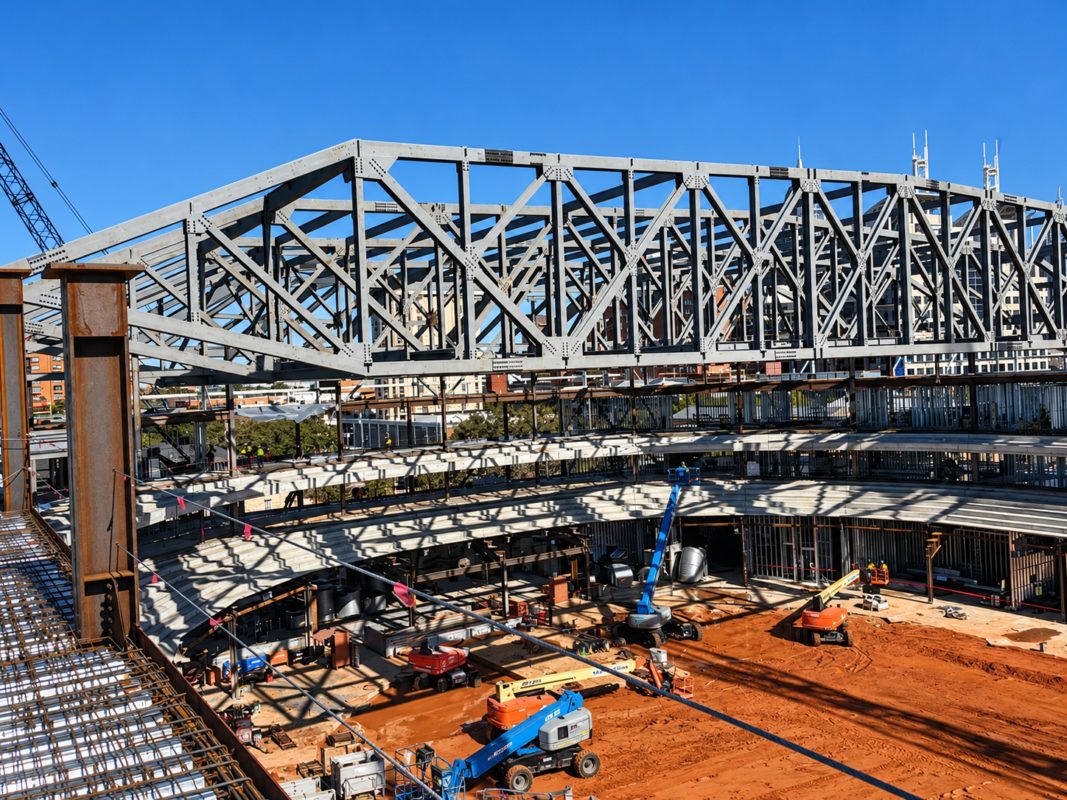
The project known as “Mobile Arena” is currently being developed in Mobile, Alabama (USA). It is specially designed to be a top-tier entertainment venue suitable for concerts, family events, and various sports activities, accommodating up to 10,000 attendees.
Greenbrook Engineering was contracted by Garrison Steel to deliver comprehensive structural and miscellaneous steel detailing, including connection design services, for this significant project.
Garrison Steel is an AISC-certified advanced structural steel fabricator and erector with more than 30 years of experience in the industry. Their dedication to quality and responsiveness enabled us to develop a more detailed Tekla model. This project required intricate detailing, which Greenbrook Engineering executed with accuracy and punctuality.
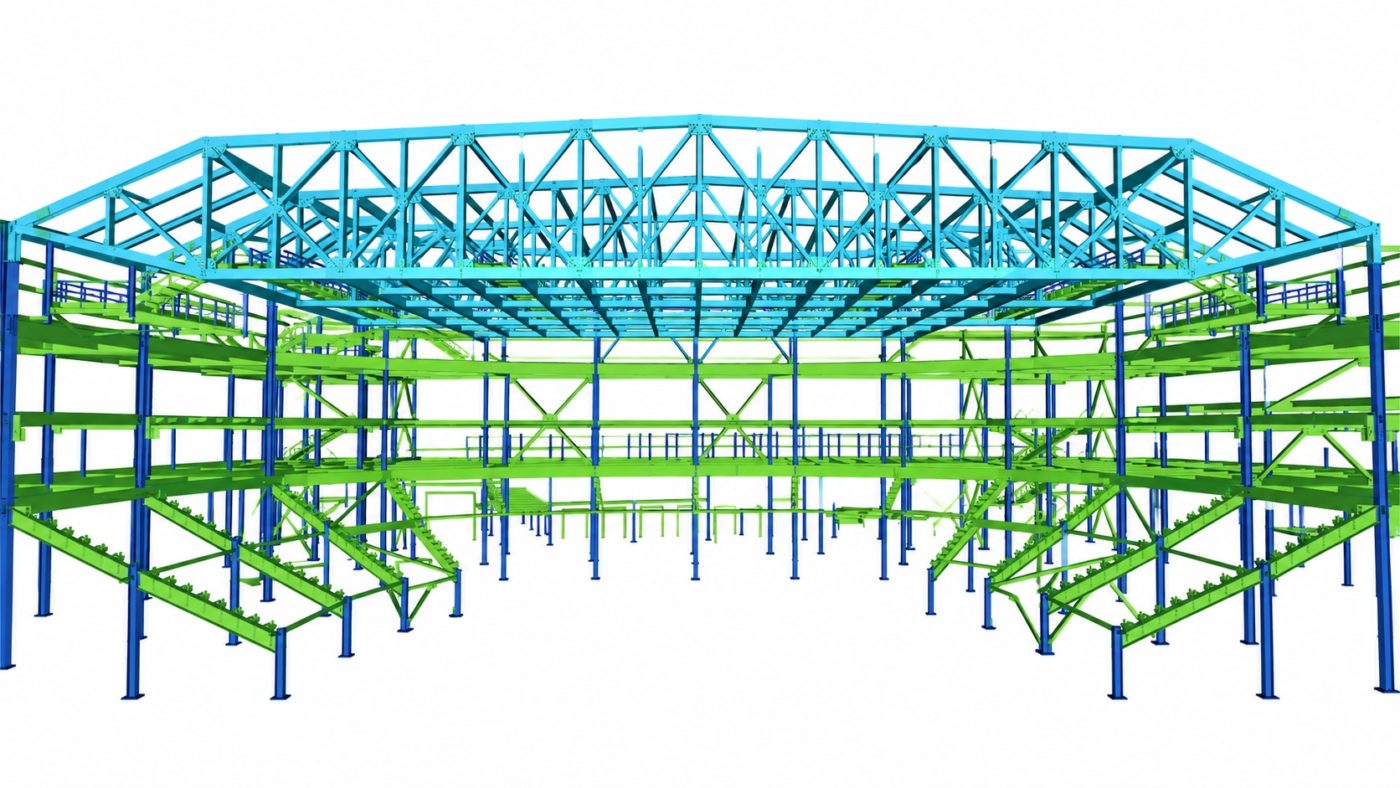
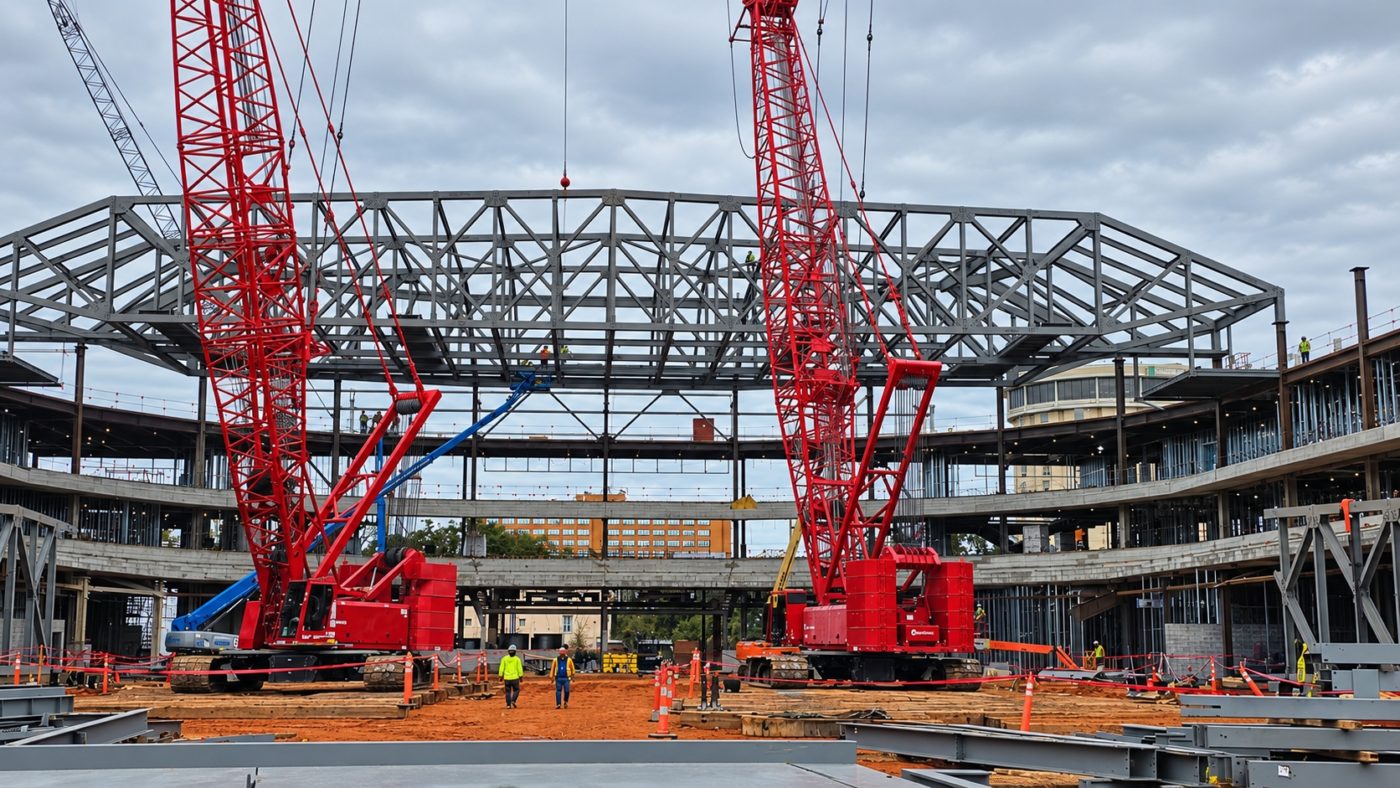
The facility features a striking architectural roof system supported by large, long-span trusses that cover the arena floor, serving as a key visual and structural component of the building. The design includes complex curved beams, rakers, catwalks, and both sloped and skew-framed elements throughout. The roof truss system, shown in the project photos, was assembled using large crawler cranes and necessitated precise engineering to guarantee safe erection sequencing.
Greenbrook Engineering’s responsibilities for this intricate project included multi-disciplinary coordination, involving interfaces with precast concrete components, elevator shafts, MEP systems, and cast-in-place concrete. The project required a high degree of model precision due to the numerous trades involved and the architectural complexity of the structure.
Managing complex geometry and multi-discipline coordination at 3,000-ton scale
The project was large in scale and structurally complex, it combined high tonnage, challenging geometry and a demanding multidiscipline coordination environment. The key challenges were as follows:
“The Mobile Arena project reinforced the core idea that a model-centric workflow is not just beneficial on large, complex structural projects – it is essential. Tekla’s capability to handle complex geometry, automate drawing production, collaborate and support multi-discipline coordination in a single environment, significantly reduced risk and improved delivery quality. The model-driven workflow helped identify and resolve issues during the modeling stage rather than later, during drawing reviews. This reduced drawing revision cycles and cut rework by an estimated 30 to 35 percent compared with traditional 2D detailing methods. The coordinated 3D model also led to highly accurate shop drawings, keeping in mind our customer’s requirements. At the same time, revising automated bill of materials, and CNC data export accelerated the fabrication process and supported on-time delivery of the project.”
– Sibby Kuriakose, COO, Greenbrook Engineering
Geometric Complexity: The structure contained curved beams, sloped and skewed members, and raker frames, requiring precise, parametric modelling to achieve accurate cut lengths, hole patterns, and connection details. Manual detailing of such geometry would have increased risk of errors.
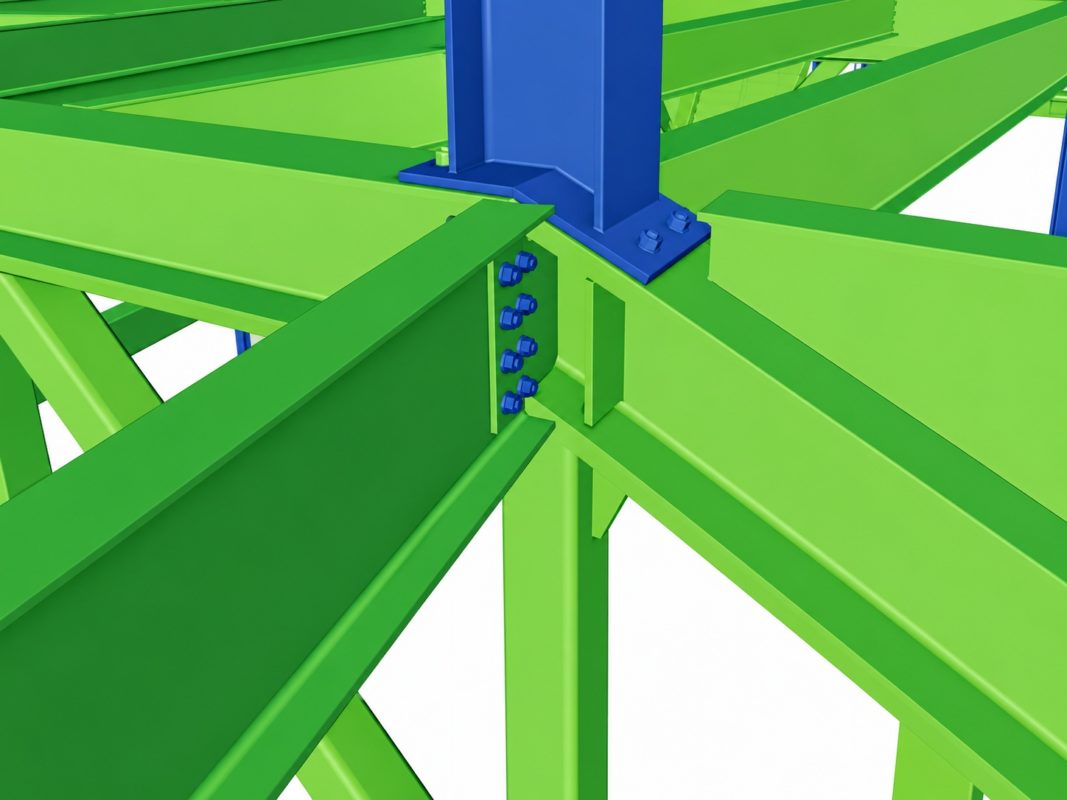
Long-Span Trusses: The massive roof trusses presented challenges both for fabrication and erection. Connection design at truss nodes involved high-load gusset and bolted splice connections, visible in the detailed callout circles. These connections had to be designed and detailed to meet load requirements while remaining constructable.
Multi-Trade Coordination: Simultaneous coordination with precast units, MEP, concrete, and elevator systems required Greenbrook Engineering to maintain a clash-free model and communicate precise embed and anchor locations to multiple parties.
Scale: With the sheer volume of assemblies, connections and drawings required, we were able to plan and organize a model-centric approach to avoid errors.
Leveraging Tekla Structures to model complex geometry and coordinate multidisciplinary workflows.
Tekla Structures was selected as the primary platform for this project due to its advanced capability in handling complex 3D structural geometry, and its extensive toolset for connection detailing and multi-discipline coordination.
Specifically, Tekla was chosen to address the following requirements:
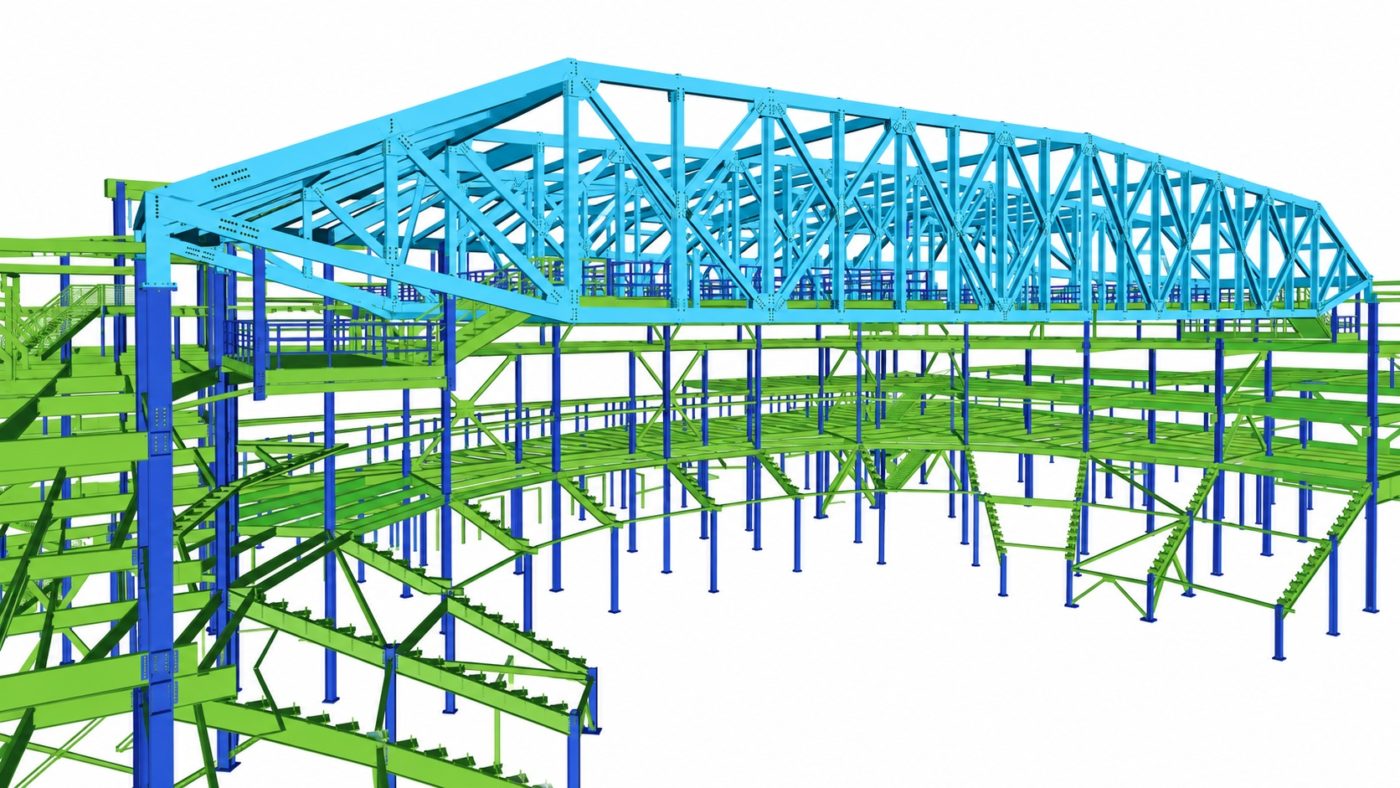
Curved and Complex Geometry Modelling: Tekla’s parametric modelling environment enabled accurate creation of curved, sloped, and skewed members and not just the approximations inherent in 2D drafting.
Connection Design Aid: Tekla’s built-in connection macros and custom component capability allowed Greenbrook Engineering to efficiently detail and model the complex node connections at truss joints and beam-to-column interfaces.
IFC / Multi-Discipline Coordination: Tekla’s ability to export IFC models and reference external models enabled smoother coordination with precast, MEP, concrete, and elevator consultants, and reduced clash risk.
Drawing Automation: For this project of 3,000 tons, automated drawing generation from the model was critical to maintaining accuracy across the high volume of shop drawings and erection drawings required.
Model Sharing: This was a large job with an aggressive schedule. Multiple teams across Greenbrook’s branches collaborated on the project. Tekla’s model sharing options facilitated execution from different locations in a short time.
Using Tekla to deliver accurate modeling, coordinated detailing, and automated drawing production
Overcoming Geometric Complexity: Tekla’s 3D parametric environment allowed the team to model all curved beams, rakers, and skewed members accurately. The model served as the single source of truth, ensuring all cut lengths, copes, and hole patterns were correct from first issue.
Truss Connection Detailing: Tekla’s advanced connection tools allowed Greenbrook Engineering to model the intricate bolted gusset connections at truss panel points as highlighted in the project images, ensuring all bolt groups, plate sizes, and weld preparations were accurately represented and coordinated.
Coordination: By maintaining a live 3D model with reference models from precast and MEP trades, Greenbrook Engineering’s team was able to identify and resolve clashes proactively, avoiding costly field interferences.
Drawing Production: Tekla’s automated drawing tools generated shop drawings and erection drawings directly from the model, significantly reducing the manual drafting effort and ensuring drawings remained synchronized with model changes throughout the project lifecycle.
Trimble Connect: Model uploads to Trimble Connect at regular intervals enabled the fabricator to access the most current model throughout the project timeline.
Tekla Structures enabled seamless collaboration with all project stakeholders through a shared-model environment. The Tekla model provided a visual platform for coordination meetings, allowing designers, fabricators, and contractors to identify and resolve issues collaboratively. Further, the team reported high confidence in the accuracy of information delivered, and the visual nature of the 3D model greatly improved communication across trades.
Lessons from a model-first approach to complex structural steel projects
A key learning was the importance of investing time upfront in model setup and coordination protocols. The time spent on aligning reference models and establishing model management standards proved invaluable throughout the project, resulting in fewer clashes and smoother fabricator reviews.
For the industry, Greenbrook Engineering strongly recommends adoption of tools like Tekla Structures, particularly for projects of medium-to-high complexity. The shift from 3D modelling to 3D collaborative model-based detailing is no longer a competitive advantage – it is becoming an industry baseline. Firms that invest in collaboration-centric workflows today will be better positioned to handle increasingly complex projects, meet faster delivery expectations, and participate in collaborative project delivery models such as Integrated Project Delivery and Design-Build. The investment in training and workflow development yields measurable returns from the very first project.
“The standout feature for the project team was Tekla’s collaboration capabilities through Trimble Connect and Tekla Model Sharing and its connection modelling capability. Given the complexity of the truss node connections and the sheer variety of non-standard beam conditions (curved, sloped, skewed), the ability to create and reuse parametric custom connections was invaluable. This feature allowed us to model complex bolted and welded connections accurately and consistently across hundreds of similar nodes. The visual feedback of seeing the fully detailed connection in 3D before production of drawings, bolstered the steel construction team’s confidence in rapid fabrication and erection.”
– Murli Balu, President, Greenbrook Engineering
– Source: Trimble
